Property Buying Checklist for First-Time Buyers in Pakistan
Buying your first property in Pakistan is a big step, and it is easy to feel overwhelmed by the paperwork, the jargon, and the number of people giving you advice. Most first-time buyers focus on the price and the location. The buyers who avoid problems later are the ones who follow a checklist — not because it is complicated, but because it keeps them from skipping steps that matter.
A first-time buyer in Pakistan should work through six stages in order: set a realistic budget including hidden costs, choose the right location and property type, verify ownership and documents through the society or revenue record, physically inspect the property for condition, access, and boundaries, confirm there are no outstanding dues, mortgages, or disputes, and complete the transfer through proper legal and registration procedures. Do not pay any significant amount before verification. Put every agreement in writing, keep receipts, and involve a qualified property lawyer before signing anything.
The checklist below applies to most residential purchases — houses, plots, and files — in Islamabad, Rawalpindi, and the surrounding housing societies. Some steps differ depending on whether you are buying in a society like Multi Gardens B-17 (MPCHS), a CDA-administered area, or a revenue estate. Always confirm current requirements with the relevant society or authority before committing.
1. Start With Budget and Hidden Costs
The purchase price is not the only cost. First-time buyers often budget for the property and then discover that transfer fees, taxes, society charges, and legal fees add up quickly.
Before you start viewing properties, work out two numbers: the maximum you can afford to pay for the property itself, and the total amount you will need to complete the transaction. The second number is always higher.
Budget Checklist
- Total purchase price
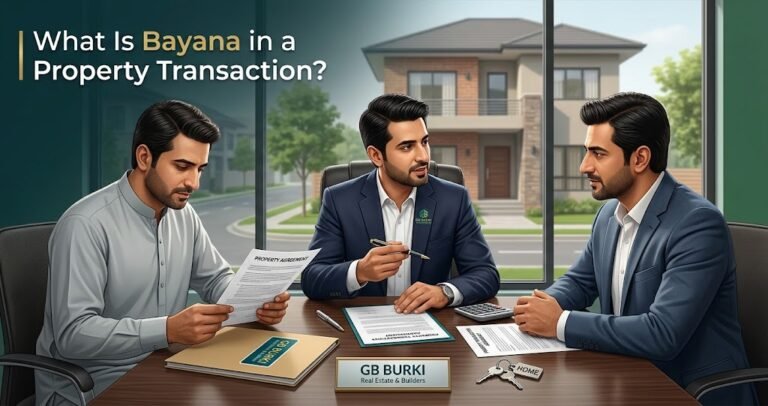
- Token, bayana, and balance payment schedule
- Transfer fee and registration charges
- Society transfer and documentation charges
- Outstanding dues, if any
- Lawyer and document preparation fees
- Taxes applicable to the transaction
- Immediate repair or development costs
If you are buying a plot, factor in the cost of development — boundary walls, levelling, and utility connections — before you commit. If you are buying a house, keep a reserve for repairs that always seem to appear after you move in.
For a detailed explanation of how token and bayana payments fit into the process, see our guides on what a property token is and what bayana means in a property transaction.
2. Choose the Location and Property Type Carefully
Location affects everything: daily convenience, access to work and schools, resale potential, and how easy it is to rent out if you ever move. The right location for one buyer is the wrong one for another, so start with your own requirements rather than what is trending.
Ask yourself a few practical questions. How long is your daily commute? Do you need a school or hospital nearby? Will you need a car, or is public transport important? Is the area fully developed, partly developed, or still in early stages? Is the road access comfortable, or does it become difficult in rain?
For families, the presence of schools, parks, and healthcare facilities often matters more than proximity to commercial areas. If you are considering B-17, our article on whether Multi Gardens B-17 is suitable for families may help you weigh the trade-offs.
Visit the area at different times of day. A road that looks wide on a weekday morning can become a bottleneck during evening hours. A quiet street can turn out to be a busy market route. Short visits do not reveal these patterns.
3. Verify Ownership and Documents
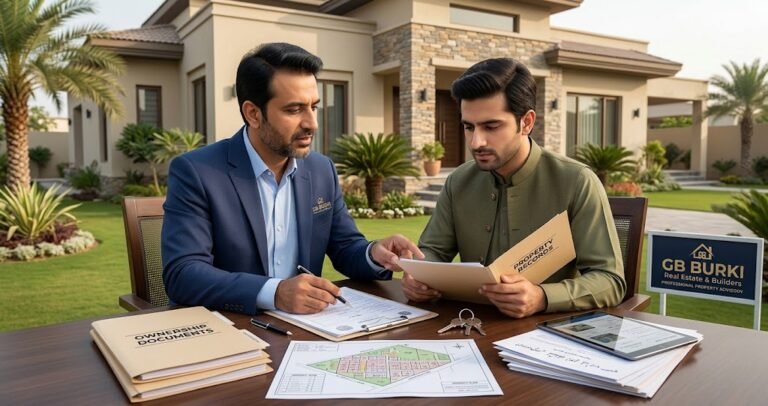
This is the step most first-time buyers underestimate. In Pakistan, ownership records are maintained across several systems — provincial revenue departments, sub-registrars, development authorities, and housing societies. You need to confirm the right record for your specific property.
What to verify
Match the seller's name on the ownership document with their CNIC. Confirm that the property description (plot number, khasra, khewat, or society plot number) matches the physical property. Check whether the property is in the seller's sole name or is jointly owned. If it is jointly owned, all owners must be part of the sale.
Check for any mortgage, lien, court order, or status quo recorded against the property. A fresh ownership record with a QR code, where available, helps confirm the document is genuine. Our step-by-step guide on how to verify property ownership in Pakistan walks through the specific checks for Punjab, Islamabad, and society properties.
If the seller is acting through a Power of Attorney, verify that the PoA is properly registered and that its scope actually covers the sale. A forged or vague Power of Attorney is one of the most common tools in property fraud. For a full list, see documents to verify before buying property in Pakistan.
4. Inspect the Property in Person
Documents tell you who owns the property. A site visit tells you whether the property matches the documents. For first-time buyers especially, an inspection is where you catch problems that no amount of paperwork will reveal.
If you are buying a plot, visit the site and check the corner markers, boundary walls, and access road. Confirm the plot is not encroached upon and that the dimensions on the ground match the dimensions on the layout plan. If the plot is in a partly developed area, ask the society what stage the surrounding development is at.
If you are buying a house, look beyond the rooms. Check water pressure, signs of dampness or leakage, drainage, and electrical condition. Visit during or after rain if possible to see how the property handles water. Look at the roof, the plumbing, and the walls for cracks or repairs that suggest underlying problems.
Physical Inspection Checklist
- Boundaries and corner markers match documents
- Access road is usable and not disputed
- No encroachment on the property
- Water pressure and drainage are adequate
- No dampness, leakage, or major cracks
- Electrical wiring and fittings are safe
- Gas and utility connections where applicable
- Neighbouring plots or buildings do not create problems
For plot-specific guidance, our article on what to check before buying a residential plot covers the details. If you are buying a house in Islamabad, the checks in what to check before buying a house in Islamabad apply.
5. Check Society or Authority Records and Dues
In a housing society, the ownership document is only part of the story. The society's own record confirms whether the seller is a recognised member, whether the plot is allotted and in possession, and whether any dues are outstanding.
Ask the society office for a written statement of dues on the property. Unpaid maintenance charges, service charges, or development charges can block transfer and, in some cases, lead to the allotment being cancelled. Confirm who is responsible for clearing any dues before the transfer is completed.
For CDA-administered properties in Islamabad, a No Demand Certificate is typically required at the time of transfer. The exact requirements and process can change, so confirm the current position with the relevant authority or society office. Our article on allotment and possession explains how these two stages differ and why both matter.
6. Complete the Transfer Properly
The transfer is the final stage, and it is where the legal ownership actually moves from the seller to you. Whether the property is in a housing society or a revenue estate, the principle is the same: the transfer must be properly documented and recorded.
For a registered sale deed, the transaction is completed at the Sub-Registrar's office, and the mutation is recorded in the revenue records. For a society property, the society issues a transfer letter in your name after the transfer fee is paid and the dues are cleared. Without these steps, your name may not appear as the owner in the official record, even if you have paid.
Pay through banking channels wherever possible, and keep receipts for every payment. If you are paying in cash, get a signed receipt that clearly states the amount, the date, and what the payment is for. A good lawyer will help you structure the payments and the documentation to protect your interests.
Example
Consider a first-time buyer who pays the full amount for a plot, receives a signed receipt, but never completes the society transfer. A year later, the seller's circumstances change, and the society's record still shows the seller as the owner. The buyer has paid but is not recorded as the owner, and sorting this out becomes complicated. Completing the transfer at the time of payment avoids this situation.
Common Mistakes First-Time Buyers Make
Most problems first-time buyers face come from a handful of repeated errors.
Paying before verifying. Once money changes hands, your negotiating position weakens. Verify first, then pay.
Trusting a photocopy. Photocopies are easy to alter. Ask to see originals and verify them against the society or revenue record.
Ignoring outstanding dues. Unpaid society charges can block transfer. Get them confirmed in writing before you commit.
Skipping the site visit. A plot or house can look fine on paper and have problems on the ground. Always visit in person.
Not involving a lawyer. A property lawyer reviews the documents, checks the chain of title, and helps you structure the transaction. Skipping this step to save a small fee can cost much more later.
Rushing because of pressure. A seller who insists you must decide today is a seller you should slow down with. Genuine sellers with clear title are not afraid of a few days of verification.
Local Considerations in Islamabad and Rawalpindi
The buying process varies by area. In housing societies such as Multi Gardens B-17 (MPCHS), Faisal Hills, Faisal Margalla City, and Faisal Town, the society office handles allotment, possession, transfer, and dues. Procedures, fees, and conditions can differ from one society to another, and they can change over time. Confirm current requirements directly with the relevant society office.
In Islamabad, properties in CDA-administered areas follow a separate route, with authority requirements that apply at the time of transfer. In Punjab, the Punjab Land Records Authority's digital system covers many revenue estates, but not every property appears in one digital system. Buyers should identify which system applies to their specific property before starting verification.
If you are selling rather than buying, the seller's side is covered in what property sellers should prepare before listing. You can also explore areas we serve and current property listings to understand what is available in different parts of the region.
Frequently Asked Questions
How much money do I need beyond the property price?
This depends on the property type, location, and the applicable transfer charges. At a minimum, budget for the transfer fee, registration charges, society documentation charges, lawyer fees, and any taxes that apply to the transaction. If the property has outstanding dues, factor those in as well. Confirm the current charges with the relevant society or authority before you commit.
Should I buy a plot or a house as a first-time buyer?
It depends on your plans. A plot usually costs less and gives you time to build later, but you cannot live in it immediately. A house is ready to use but generally costs more and may need repairs. If you need a place to live now, a house may suit you better. If you are planning for the future and can wait, a plot may be more practical.
Is it safe to buy a property through a dealer?
Many transactions in Pakistan are facilitated by dealers, and a reputable dealer can help you navigate the process. However, the final verification should always be independent. Confirm ownership through the society or revenue record, inspect the property yourself, and involve a lawyer. Do not rely solely on the dealer's assurance.
How long does the buying process usually take?
The timeline varies widely. Once the price is agreed and the documents are verified, the transfer itself can sometimes be completed in a few days for a society property, or longer for a registered sale deed and mutation. Delays usually come from outstanding dues, incomplete documents, or issues that surface during verification. Starting the verification early is the best way to keep the process moving.
What if the seller is not the owner but is selling on someone else's behalf?
This is common when a seller is acting through a Power of Attorney. Verify the PoA's authenticity, its scope, and whether it is properly registered and attested. The sale should be in line with what the PoA authorises. If there is any doubt, involve a lawyer before proceeding.
Do I need a lawyer for a society plot purchase?
It is strongly recommended. A lawyer can review the documents, check the chain of title, confirm the society's requirements, and help you structure the transaction so your interests are protected. Even in a straightforward society transfer, a legal review is worth the cost.
Final Thoughts
Buying your first property is a learning experience, but the checklist itself is not complicated. Set a realistic budget, choose a location that fits your life, verify ownership and documents, inspect the property in person, confirm there are no dues or disputes, and complete the transfer properly. Every step exists because skipping it has caused problems for someone else.
Whether you are buying in Multi Gardens B-17 (MPCHS), Faisal Hills, Faisal Margalla City, Faisal Town, or anywhere else in Islamabad or Rawalpindi, the same discipline applies. Verify before you pay, get everything in writing, and involve a lawyer before you sign.
If you would like help reviewing property documents or discussing a property requirement, you can contact GB BURKI Real Estate & Builders directly.

Ikram Ullah Barki
Ikram Ullah Barki is the founder of GB BURKI Real Estate & Builders and has been involved in the property business since 2011. His work focuses on property buying, selling, investment, and real estate opportunities across Islamabad and surrounding areas.
You can read more about his background on the Founder page, or explore property services offered by GB BURKI.
Get in Touch With GB BURKI
Call, WhatsApp, or email us for property guidance in Islamabad and Rawalpindi.
Buying Your First Property?
Tell GB BURKI Real Estate & Builders about your property requirement. The team can help you understand what documents to check and review available options in Islamabad and Rawalpindi.