How to Verify Property Ownership in Pakistan
Property fraud in Pakistan often starts with a document that looks genuine but is not. Buyers lose money because they trusted a photocopy, a broker's assurance, or a verbal promise instead of verifying ownership through the proper channels. This guide explains how to verify property ownership in Pakistan, step by step, using official records and practical checks.
To verify property ownership in Pakistan, obtain a fresh Fard (Record of Rights) and verify it through the PLRA portal or QR code, check the Registry and Mutation records to confirm the chain of title, verify the seller's CNIC, confirm there is no pending litigation or mortgage on the property, check society or authority records (CDA, LDA, RDA, or housing society), and clear any outstanding dues. The exact process depends on whether the property is in Punjab, Islamabad, or another province, and whether it is a revenue estate, urban registered property, or housing society plot.
There is no single government database that covers every property in Pakistan. Ownership records are spread across provincial land revenue departments, sub-registrars, development authorities, and housing societies. Verification means checking the right source for your specific property, not just one document.
Start With the Fard (Record of Rights)
The Fard-e-Malkiat is the foundation of ownership verification. It is an official document maintained by the land revenue department that shows the registered owner's name, the property's area, location, and any recorded encumbrances.
What to check in the Fard
Fard Verification Checklist
- Owner's name matches the seller's CNIC
- Property description (khasra, khewat, plot number) matches the physical property
- Area matches what the seller claims
- No mortgage, lien, or court order recorded
- Fard is recent (ideally not older than three months)
- QR code present (where applicable)
In Punjab, the Punjab Land Records Authority (PLRA) allows citizens and overseas Pakistanis to obtain and verify Fard through its digital platform and Arazi Record Centers (ARCs)[reference:0]. PLRA replaced the old manual patwari system with a digitized, centralized database designed to reduce human error and misuse[reference:1].
Always demand a fresh Fard with a QR code. Scan it using the PLRA portal to confirm it is genuine. According to the Ministry of Foreign Affairs advisory for overseas Pakistanis, verifying the Fard through QR code and ensuring there is no pending litigation (Status Quo, Mortgages) is a critical step[reference:2].
Check the Registry and Mutation Records
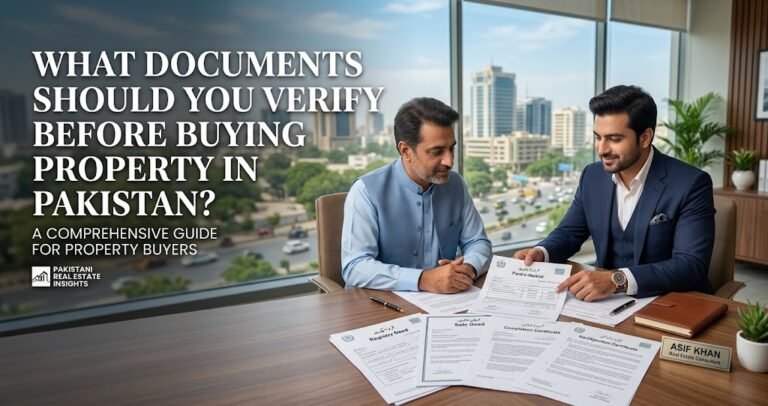
The Fard shows current ownership, but it does not show the full history of how the property changed hands. To understand the chain of title, you need the Registry (sale deed) and Mutation (Intiqal) records.
| Document | What It Shows | Where to Check |
|---|---|---|
| Registry / Sale Deed | Each previous transfer of ownership | Sub-Registrar's office |
| Mutation (Intiqal) | Entry in revenue records confirming new owner | PLRA / Revenue department |
| Jamabandi | Periodic record of rights showing current ownership | PLRA / Revenue department |
| Non-Encumbrance Certificate | Confirms no mortgage or lien on the property | Registrar's office |
The Registry must be registered at the Sub-Registrar's office. Without mutation, the buyer does not appear in the revenue records as the owner. According to the MOFA advisory, buyers should make sure the registered deed is registered and mutation is incorporated in the revenue record, and should insist on attestation of the deed and its mutation copy[reference:3].
Example
Imagine a buyer who sees a plot, checks the Fard, and sees the seller's name. The buyer pays the full amount. Later, the buyer discovers that the seller acquired the plot through a forged Power of Attorney and the original owner has filed a court case. If the buyer had checked the chain of title through the Registry and Mutation records, the forged transfer would have been visible.
Verify the Seller's Identity and Authority
A property document is only as reliable as the person selling it. If the seller is not the legal owner, or if someone is acting on the owner's behalf without proper authority, the transaction can be invalid.
What to verify
Check the seller's CNIC through NADRA verification services and match the name, photograph, and address with the ownership record. If someone else is selling on behalf of the owner through a Power of Attorney, verify the PoA's authenticity, its scope, and whether it is properly registered and attested. A forged Power of Attorney is one of the most common tools used in property fraud.
According to the MOFA advisory, cross-checking the seller's identity through CNIC, photograph, and address is a standard step in verifying land transactions[reference:4].
Check Society or Authority Records
If the property is in a housing society or a development authority area, the land revenue records may not tell the full story. You also need to check the society's or authority's own records.
For housing societies
Check the society's approved layout plan, confirm the specific plot is allocated to the seller, and verify that there are no outstanding dues. The National Accountability Bureau (NAB) has launched an Online Property Information System (OPIS) that allows the public to verify the legal status and approved layout plans of housing societies before making investments[reference:5]. Buyers can now verify whether a housing society is approved before making financial commitments[reference:6].
For CDA-approved areas in Islamabad
The Capital Development Authority (CDA) requires a fresh No Demand Certificate (NDC) for every property transfer in Islamabad. The certificate is issued after verification of the property's latest status, including outstanding dues, legal encumbrances, building violations, and other restrictions[reference:7]. Anyone purchasing property in Islamabad should confirm that the seller can provide the required documentation and obtain a fresh NDC for the specific transfer[reference:8].
Check for Outstanding Dues and Encumbrances
A property can carry liabilities that transfer with it if they are not identified and cleared before purchase.
Encumbrance and Dues Checklist
- Property tax clearance receipts
- Society maintenance and service charge clearance
- Utility bill clearances (electricity, gas, water)
- Non-encumbrance certificate from Registrar
- No pending mortgage or bank loan against the property
- No court stay order or litigation pending
Ask the seller for written clearance on outstanding dues. If dues exist, the buyer and seller should agree in writing on who will pay them before the transfer is completed.
Verify FBR Tax Clearance Where Applicable
Property transactions in Pakistan are subject to tax requirements. Section 7E of the Income Tax Ordinance, 2001 treats the ownership of immovable property as if it generates income, even if it is not rented out. According to FBR Circular No. 03 of 2023-24, the provisions of section 7E apply only to resident persons as defined in section 82 of the Income Tax Ordinance, 2001[reference:9].
Non-resident individuals, including non-resident Pakistanis, are not required to pay tax under section 7E. However, they must furnish Form-B along with a scanned copy of their valid passport and CNIC/NICOP/POC to the transferring authority[reference:10].
Because tax rules and requirements can change, buyers should confirm the current process with a tax professional or the relevant authority before finalising the transfer.
Physical Inspection and Boundary Verification
Documents can be correct while the physical reality is different. A plot may have been encroached upon, a boundary wall may have been moved, or the property on the ground may not match the dimensions in the documents.
Visit the property in person. Check the corner markers, boundary walls, and the position of the plot relative to the road and neighbouring plots. The MOFA advisory recommends physically inspecting the land for encroachments or disputes[reference:11]. If there is any doubt, have the property measured by a professional.
Practical Ownership Verification Checklist
The following checklist summarises the steps buyers should complete before making any payment for property in Pakistan.
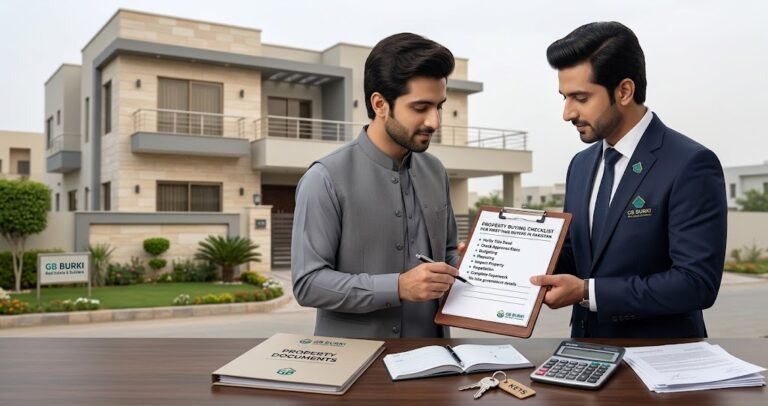
Pre-Purchase Verification Checklist
- Obtain fresh Fard and verify QR code
- Check Registry and Mutation records for chain of title
- Verify seller's CNIC through NADRA
- Check Power of Attorney authenticity, if applicable
- Confirm no mortgage, lien, or court order
- Check society or authority records (NOC/NDC)
- Verify FBR Section 7E clearance (if applicable)
- Inspect property physically for boundaries and encroachment
- Confirm outstanding dues are cleared
- Have a lawyer review all documents
- Keep records of every payment through banking channels
Verification for Overseas Pakistanis
Overseas Pakistanis face additional challenges when verifying property ownership from abroad. Remote verification is possible, but it requires more care and independent checks.
PLRA allows overseas Pakistanis to verify ownership, obtain Fard, and perform land transactions remotely via digital platforms and MOFA embassies[reference:12]. A digital platform launched through a collaboration between PLRA and the Ministry of Foreign Affairs offers services such as online sale deeds, Fard (Record of Rights), e-Girdawari, mutation entries, and document attestation, secured by blockchain technology to prevent fraud[reference:13].
For overseas buyers, the MOFA advisory recommends verifying land ownership through the Fard and previous transaction history, cross-checking the seller's identity, avoiding cash transactions, and using official banking channels such as pay orders or demand drafts[reference:14]. A qualified lawyer should be involved in every remote purchase.
Common Red Flags in Property Verification
Certain warning signs should prompt a buyer to pause and investigate further, or walk away entirely.
Red Flags to Watch For
- Seller refuses to show original documents
- Fard is old or does not have a QR code
- Name on documents does not match seller's CNIC
- Property is in joint ownership without partition
- Power of Attorney is vague or unregistered
- Seller discourages independent verification
- Outstanding dues are not disclosed
- Physical property does not match documents
Local Considerations for Islamabad and Rawalpindi
Verification requirements differ between areas. In Islamabad, CDA-approved properties require a No Demand Certificate for transfer, and the CDA has retained this requirement for every subsequent transfer[reference:15]. In housing societies like Multi Gardens B-17 (MPCHS), Faisal Hills, Faisal Margalla City, and Faisal Town, the society's own records and NOC process apply.
In Punjab, PLRA's digital system covers many revenue estates, but not every property appears in one digital system. Development-authority, society, urban registry, and other records may need separate verification[reference:16]. Buyers should identify which system applies to their specific property before starting verification.
Frequently Asked Questions
How can I check property ownership online in Pakistan?
In Punjab, the Punjab Land Records Authority (PLRA) allows you to check Fard and registry details online using CNIC numbers or plot identifiers. Visit the official PLRA portal or an Arazi Record Center. Online checks are a useful starting point, but they do not replace physical inspection and legal review.
What is the difference between Fard and Registry?
The Fard is a current record of ownership maintained by the land revenue department. The Registry is the registered sale deed that documents each transfer of ownership. The Fard shows who currently owns the property; the Registry shows how ownership passed from one person to another. Both are important for verification.
Do I need a lawyer to verify property ownership?
It is strongly recommended. A qualified property lawyer can check the chain of title, review the documents for authenticity, identify potential risks, and guide you through the transfer process. The exact legal requirements can vary by area, and a lawyer can confirm what applies to your specific purchase.
How can overseas Pakistanis verify property ownership?
PLRA allows overseas Pakistanis to verify ownership, obtain Fard, and perform land transactions remotely via digital platforms and MOFA embassies. You can also authorise a trusted representative through a properly registered Power of Attorney. Always involve a qualified lawyer and use official banking channels for payments.
What is a No Demand Certificate (NDC)?
An NDC is a certificate issued by the CDA or a housing society confirming that there are no outstanding dues, legal encumbrances, or building violations on a property. In Islamabad, the CDA requires a fresh NDC for every property transfer. Buyers should confirm that the seller can provide the required documentation.
Can I verify ownership of a property in a housing society?
Yes. For housing society properties, you should check the society's approved layout plan, confirm the plot is allocated to the seller, and verify that there are no outstanding dues. NAB's Online Property Information System (OPIS) allows the public to verify the legal status and approved layout plans of housing societies before investing.
What should I do if I suspect a document is forged?
Do not make any payment. Stop the transaction immediately and consult a qualified property lawyer. You can also report the matter to the relevant authority, such as the CDA, PLRA, or NAB, depending on the property location. Verifying documents through official channels before paying any amount is the best protection.
Final Thoughts
Verifying property ownership in Pakistan is not a single check. It is a process that involves checking the Fard, the Registry, the Mutation, the seller's identity, society or authority records, and the physical property itself. Each step exists because fraudsters exploit gaps between these systems.
Whether you are buying a house, a plot, or a commercial property in Multi Gardens B-17 (MPCHS), Faisal Hills, Faisal Margalla City, Faisal Town, or anywhere else in Islamabad or Rawalpindi, the same discipline applies. Verify before you pay, and involve a lawyer before you sign.
If you would like help reviewing property documents or discussing a property requirement, you can contact GB BURKI Real Estate & Builders directly.

Ikram Ullah Barki
Ikram Ullah Barki is the founder of GB BURKI Real Estate & Builders and has been involved in the property business since 2011. His work focuses on property buying, selling, investment, and real estate opportunities across Islamabad and surrounding areas.
You can read more about his background on the Founder page, or explore property services offered by GB BURKI.
Get in Touch With GB BURKI
Call, WhatsApp, or email us for property guidance in Islamabad and Rawalpindi.
Need Help Verifying a Property?
Tell GB BURKI Real Estate & Builders about your property requirement. The team can help you understand what documents to check and review available options in Islamabad and Rawalpindi.